November 20-21 - 2017 Marianna, Florida


Monday we moved from Birmingham, Alabama to Marianna on the Florida panhandle (håndtag til en stegepande😊). A nice trip down US Highway 231 (225 miles/350km). A good road with a lot less traffic than we are used to and a lot less semis (lastbiler).

We had read that Alabama was one of the biggest producers of cotton (bomuld/vat) in the U.S., but on our trip through the state we saw mostly trees. Then about an hour before the Florida border we finally saw a cottonfield. Mary took a walk in it, and shot a couple of pictures. None of us had ever seen the raw product before. Surprisingly close to the finished product.


The cold weather has been breathing down our neck (bidt os i hælene) the last couple of weeks. We are trying the best we can to outrun it. We have had a number of days with 50 - 60 F/5 - 10 C during the day and a few nights with 20 - 30F/0 - -5C.
Last night in Marianna it was 50F/10C and today at the beach it was 70F/21C.
Not summer, but at least better than the day temperatures we can see that Minnesota (30F/-1C) and Denmark (40F/4C) have.
Today (Tuesday), we drove along a scenic route, down by the ocean, between Panama Beach City and Santa Rosa. We saw our first palm trees of the trip.


We stopped at Grayton Beach. It was a beautiful beach, with fine white sand (felt like corn starch (kartoffelmel) when we walked in it). The water was a pretty greenish color. The area is called the “Emerald (smaragd) coast”.The weather wasn’t the greatest, but we got about 1½ hours on the beach, before it started to rain.


Written by JJ and Mary

P.S.
During our move from Alabama to Florida we passed the 10.000 miles/16000km marker of distance driven on our trip
.

November 19-20 - 2017 Birmingham, Alabama


Another move. This time from Chattanooga, Tennessee to Birmingham, Alabama (180 miles/290 km).
And another look into history.
Our trip to Birmingham, Alabama, was dedicated to trying to learn more about the civil rights movement (borgerrettighedsbevægelsen).
It started with the constitution (grundloven) in 1789, that “All men are created equal….."
It was not over at the end of the civil war (borgerkrigen) in 1865, where slavery was abolished (afskaffet).


After the civil war, a lot of the southern states passed apartheid laws (known as the Jim Crow Laws) that segregated black and white people in all aspects of life (Birmingham for instance had an ordinance (vedtægt) that prohibited (forbød) black and white to even play cards or dominoes together). The black population was also, in practice, deprived of their right to vote.
 
What happened in the southern states of the US in the mid-20th century – especially in the 1960’s? This is history from OUR lifetimes, but neither of us knew much about it, at the time it was happening. Here are some of our thoughts on the things we saw and learned.

Living in the small town of Watertown in Minnesota, Mary was not aware of how people in the south lived, or anything about the civil rights movement in the 1960’s. She was not very old at the time. And places like Alabama were just as far away for her as Europe. JJ, who grew up in the even smaller town of Rostrup, Denmark, probably knew even less.
We have heard a lot about the historical events that took place in Birmingham, Montgomery, and Selma, Alabama as adults. We have never understood, how people could treat other people so badly. Mary: "I am sad that it could happen, and I am ashamed on behalf of my countrymen. Today, I was confirmed in both of these feelings. (And even more sad – discrimination still exists)"
We were impressed by the wisdom and foresight of the leaders of the civil rights movement – people like Martin Luther King and Fred Shuttlesworth. They understood, that the movement would be most effective if it was non-violent. They taught protesters how to be forceful, without being violent. The people in power in the south didn’t know how to react to this. They used excessive violence, which made onlookers sympathize with the freedom fighters.
 
 
We were amazed at the courage of everyday people like Rosa Parks (refused to give her seat up in a bus to a white man),

Rosa Parks


the freedom riders (both black and white students, who rode on buses from Washington DC to New Orleans),


the children and young people of Birmingham (who faced violence and being put in jail when they protested about segregation and voting rights), etc.  


"I ain't afraid of your jail"

We were saddened by the misuse of power and violence, that white people used against the black, to try to retain power. People like the police commissioner in Birmingham – “Bull” Connor, or the group the Ku Klux Klan.


Birmingham police dog


We went to a service (gudstjeneste) at the 16th Street Baptist Church. For two reasons. To experience another gospel service. These services are so different from what we are used to. Much more lively (the choir was doing such a good job that the parishioners (sognebørnene) called for an encore (extranummer) and they got it
😊 (we had never seen that before)).

We also went because the 16th Street Baptist Church was the center for the protests in early 1963. In September 1963 it was bombed by Ku Klux Klan.Four girls were killed in the blast. Two more died from injuries and many more were severely injured .

 
What happened in Birmingham was important for the civil rights movement, but like so many other changes in society it was not one action that changed the world, but rather the sum of many incidents. The protests were going on all over the south from the middle of the fifties and led to the passing of the Civil Rights Act (anti diskriminations lov) in 1964.
From Martin Luther King's speech in Washington DC


It is our strong hope, that we and the rest of the world, will be able to adopt this pledge (løfte), that we found painted on a building in downtown Birmingham.


Written by Mary and JJ

November 16-18 - 2017 Chattanooga, Tennessee


On Thursday, we moved to Harrison Bay State Park, near Chattanooga, Tennessee (160 miles/250km). This is the first state park (naturområde, som drives af delstaten) we have stayed at – but not the last! It was a peaceful place on the Tennessee River. Really nice.
I went for a couple of walks, during the days we stayed at Harrison Bay. There was lots of water, and lots of wildlife. Here are some of the things I saw.
Harrison Bay

I was surprised to see
shells on the beach


We have seen squirrels everywhere we have been.


Deer tracks


A crane (trane)


Hawk (høg)
Woodpecker (spætte)


The reason, we stopped in the Chattanooga area, is because we have a friend who lives there. Nancy (Jakubic) Powell was on the Denmark-program with me, the first time I was in Denmark back in 1978-79. She was with me, the night I met JJ. So, she has known him, as long as I have (which is getting to be a long time!). We also traveled together through Europe on a Eurail pass.

We had a good time remembering the “old days”, and catching up with each other’s lives and families. We visited Nancy and her husband Rick at their home one day, and Nancy gave us a nice walking tour of downtown Chattanooga the next day. And then we met up with Rick for dinner.  

Nancy and Rick
 
We had only heard of Chattanooga from the song “Chattanooga Choo Choo”.
(You have to be kind of old though, to know that song 😊)


But we found out more about it during our visit. It is a nice town, about the size of Aalborg, on the Tennessee River. The downtown area and the harbor front is under renewal (like Aalborg), and is very nice to walk around in. Of course, it didn’t hurt that we had great weather again😊 (There were Civil War Battle Sights, Native American history sights (Trail of Tears), and a mountain (Outlook), but we stuck to enjoying a walk downtown, and being with friends.) We had a great time😊


Written by Mary

November 12-14 - 2017 Nashville, Tennessee


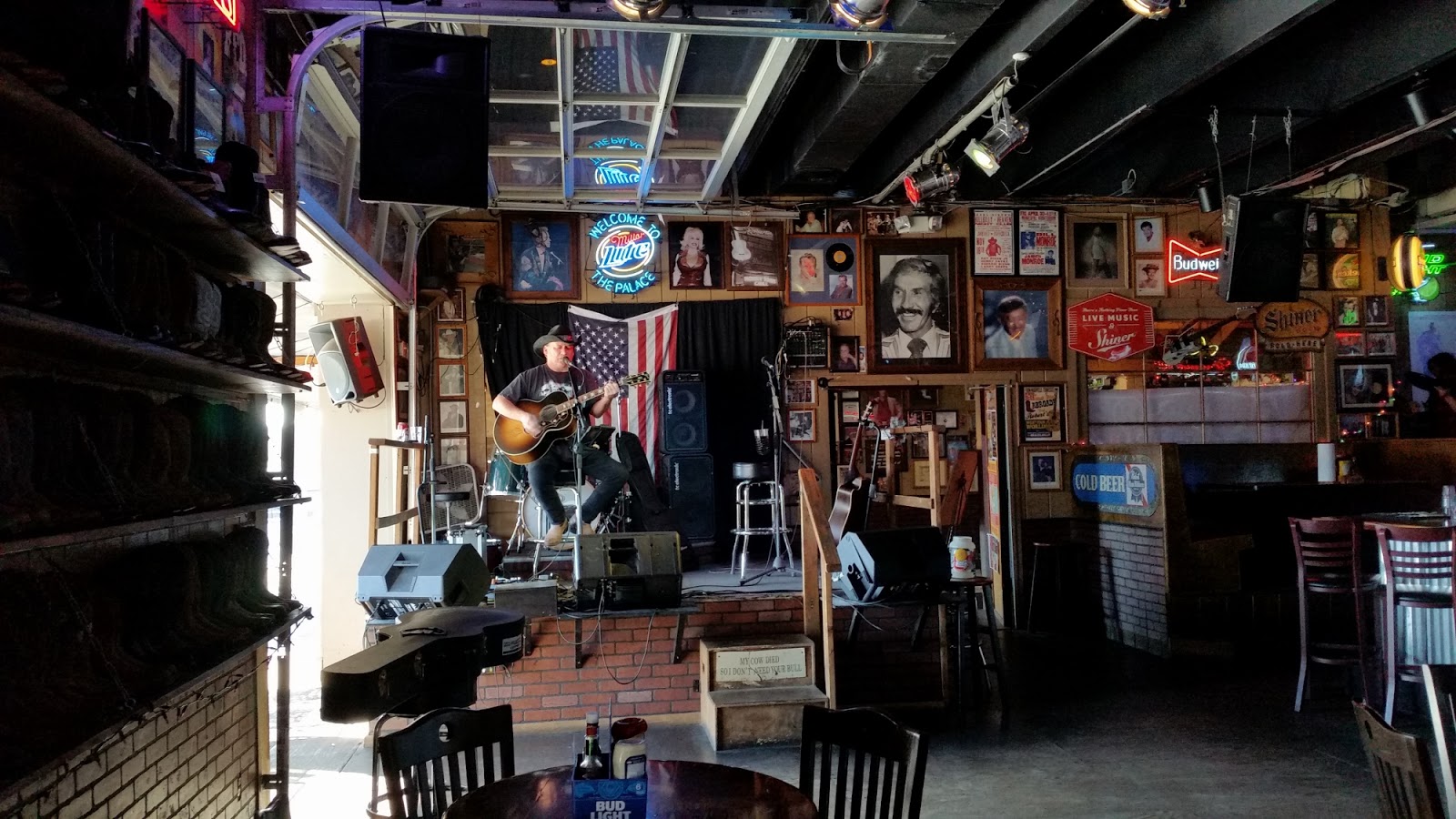
Country music is what brought us to Nashville.


There are so many bars that have live country music. There must be way over a hundred. A lot of them, at any time of the day. This is where many try to start a career. And quite a few big names have before them.
We get the feeling that many of them play for tips alone(drikkepenge).
Many of them are very good, which makes us wonder why some get a big name and great success, and some don't.


During our 3 days in Nashville we have been hitting more bars (my brother Per said we HAD to (probably would have anyway😊)), and have had more beer than we have for a looong time!! 😊 😊


Among the many bars we went into, we found at least one each day that played music to our taste. It was fun.


We tried to capture some of the music on video. It didn't turn out that great, but enough for us to be able to recall the moments down the road.(Better than nottin/bedre end et rap af en kæp) 😊

This one on request😊


Written by JJ